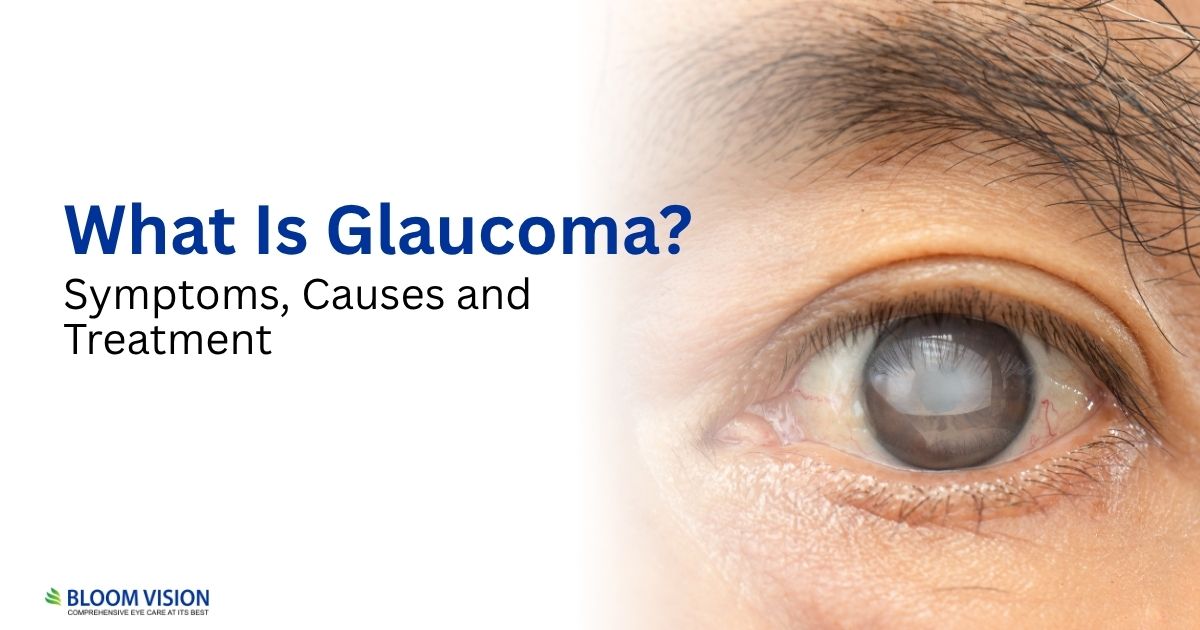
Glaucoma is a group of eye diseases that can damage the optic nerve, the nerve responsible for carrying visual information from your eye to your brain. If the damage progresses, glaucoma can lead to permanent vision loss.
One of the biggest concerns with glaucoma is that some of its most common forms can develop gradually without noticeable symptoms in the early stages. This is why glaucoma is sometimes described as a “silent thief of sight.”
Early diagnosis and appropriate treatment can help slow or prevent further vision loss. Understanding glaucoma symptoms, causes, risk factors and treatment can help you know when an eye examination is needed.
At Bloom Vision Eye Clinic, Dr. Abhishek Sharma, MBBS, MS (Ophthalmology) provides comprehensive glaucoma evaluation and eye care for patients in Dwarka, Delhi and Palam Vihar, Gurugram.
What Is Glaucoma?
Glaucoma refers to a group of conditions that damage the optic nerve.
In many people, glaucoma is associated with increased pressure inside the eye, known as intraocular pressure (IOP). However, glaucoma can also occur when eye pressure is within a statistically normal range.
The front portion of the eye continuously produces a clear fluid called aqueous humor. This fluid normally drains from the eye through its drainage system.
When drainage is impaired or the balance between fluid production and drainage is disrupted, pressure inside the eye may increase. Over time, this can contribute to optic nerve damage in susceptible individuals.
Importantly, high eye pressure does not always mean a person has glaucoma, and glaucoma can sometimes develop without markedly elevated eye pressure.
Why Is Glaucoma Dangerous?
Damage caused by glaucoma is generally irreversible.
Vision already lost because of glaucoma usually cannot be restored with current treatments. However, treatment can help lower eye pressure and reduce the risk of further damage.
This makes early detection especially important.
Many people with early open-angle glaucoma do not notice symptoms because peripheral vision may be affected gradually.
By the time a person notices substantial vision loss, significant optic nerve damage may already have occurred.
What Are the Symptoms of Glaucoma?
Symptoms vary depending on the type and stage of glaucoma.
Open-Angle Glaucoma Symptoms
Open-angle glaucoma is one of the most common forms.
In its early stages, there may be no noticeable symptoms.
As the condition progresses, a person may experience:
- Gradual loss of peripheral vision
- Difficulty noticing objects to the side
- Increasing areas of missing vision
- Tunnel vision in advanced stages
Because early symptoms may be absent, regular comprehensive eye examinations are important, particularly for people at increased risk.
Acute Angle-Closure Glaucoma Symptoms
Acute angle-closure glaucoma can occur suddenly and requires urgent medical attention.
Possible symptoms include:
- Severe eye pain
- Sudden blurred vision
- Red eye
- Headache
- Halos around lights
- Nausea
- Vomiting
- Sudden reduction in vision
Sudden severe eye pain or vision changes should be treated as a medical emergency. Seek urgent ophthalmic care immediately.
What Causes Glaucoma?
Glaucoma develops when the optic nerve becomes damaged.
In many cases, increased pressure inside the eye contributes to this damage.
Several factors can influence how fluid drains from the eye or how susceptible the optic nerve is to damage.
The exact mechanism varies depending on the type of glaucoma.
What Are the Main Types of Glaucoma?
There are several forms of glaucoma.
1. Primary Open-Angle Glaucoma
This is a common type of glaucoma.
The eye’s drainage angle remains open, but fluid may not drain efficiently enough. Eye pressure may gradually increase and optic nerve damage can develop over time.
Because it usually progresses slowly, patients may not notice symptoms during the early stages.
2. Angle-Closure Glaucoma
Angle-closure glaucoma occurs when the drainage angle between the iris and cornea becomes blocked or narrowed.
This can cause eye pressure to increase.
A sudden complete blockage can cause acute angle-closure glaucoma, which is an ophthalmic emergency.
3. Normal-Tension Glaucoma
In normal-tension glaucoma, optic nerve damage occurs even though measured eye pressure is not unusually high.
The exact reason some optic nerves become damaged at these pressure levels is not fully understood.
4. Secondary Glaucoma
Secondary glaucoma develops because of another condition or contributing factor.
Potential causes include:
- Eye injury
- Eye inflammation
- Certain medications
- Previous eye surgery
- Some eye diseases
- Abnormal blood vessels in the eye
5. Congenital or Childhood Glaucoma
Rarely, glaucoma can occur in infants and children due to abnormal development of the eye’s drainage structures or other causes.
Early diagnosis and specialist management are particularly important in childhood glaucoma.
Who Is at Risk of Developing Glaucoma?
Anyone can develop glaucoma, but certain factors may increase risk.
These include:
- Increasing age
- Elevated intraocular pressure
- Family history of glaucoma
- Thin central cornea
- High myopia or other certain refractive conditions
- Previous eye injury
- Long-term corticosteroid use
- Certain medical conditions
- Previous eye surgery
- Certain structural characteristics of the eye
Having one or more risk factors does not necessarily mean you will develop glaucoma. It may, however, mean that your ophthalmologist recommends more frequent monitoring.
Is Glaucoma Hereditary?
Family history can be an important risk factor.
If a parent, sibling or another close relative has glaucoma, tell your ophthalmologist during your eye examination.
Family members of people diagnosed with glaucoma may benefit from regular comprehensive eye examinations according to their ophthalmologist’s recommendation.
How Is Glaucoma Diagnosed?
Glaucoma cannot be diagnosed based only on whether your eye pressure is high.
A comprehensive glaucoma evaluation may include several tests.
Eye Pressure Measurement
Tonometry measures intraocular pressure.
Although important, eye pressure is only one part of glaucoma assessment.
Optic Nerve Examination
Your ophthalmologist examines the optic nerve for signs of structural damage.
Visual Field Test
A visual field test helps identify areas of peripheral or central vision loss that may be associated with glaucoma.
OCT Scan
Optical Coherence Tomography (OCT) provides detailed imaging of structures such as the optic nerve and retinal nerve fiber layer.
It can help your ophthalmologist detect and monitor structural changes.
Gonioscopy
Gonioscopy allows the ophthalmologist to examine the eye’s drainage angle and determine whether it is open, narrow or closed.
Corneal Thickness Measurement
Pachymetry measures the thickness of the cornea. Corneal thickness can affect interpretation of eye-pressure measurements and is one factor considered in glaucoma risk assessment.
Your ophthalmologist will decide which tests are appropriate based on your individual findings.
Can Glaucoma Be Cured?
Currently, most forms of glaucoma are managed rather than “cured.”
Treatment cannot generally restore vision already lost from glaucoma. The main objective is to slow or prevent further optic nerve damage and vision loss.
For many patients, this involves reducing intraocular pressure to an individualized target level.
Regular monitoring remains important even when eye pressure appears well controlled.
How Is Glaucoma Treated?
Treatment depends on the type and severity of glaucoma, eye pressure, optic nerve damage, rate of progression and individual patient factors.
Treatment options may include:
1. Glaucoma Eye Drops
Prescription eye drops are commonly used to lower intraocular pressure.
Different medications work by:
- Reducing fluid production inside the eye
- Improving drainage of fluid from the eye
- Or using a combination of these mechanisms
Eye drops need to be used exactly as prescribed.
Do not stop glaucoma medication without discussing it with your ophthalmologist, even if your vision seems normal.
2. Laser Treatment
Laser procedures may be recommended for certain types of glaucoma.
For example, Selective Laser Trabeculoplasty (SLT) may be used to improve fluid drainage in some patients with open-angle glaucoma.
For patients with narrow or closed drainage angles, a procedure such as laser peripheral iridotomy may be recommended in appropriate circumstances.
The type of laser treatment depends on the type of glaucoma and the patient’s individual eye anatomy.
3. Glaucoma Surgery
Surgery may be considered when eye drops and/or laser treatment do not provide sufficient pressure control or when the clinical situation requires surgical intervention.
Procedures may include:
- Trabeculectomy
- Glaucoma drainage devices
- Minimally invasive glaucoma surgery (MIGS)
- Other glaucoma procedures
Your ophthalmologist will determine whether surgery is appropriate based on your condition.
Can Vision Lost from Glaucoma Come Back?
Unfortunately, vision lost because of optic nerve damage from glaucoma is generally permanent.
This is why treatment focuses on protecting the vision that remains.
The earlier glaucoma is identified and appropriately managed, the better the opportunity to limit further damage.
Can Glaucoma Cause Blindness?
Glaucoma can cause severe and permanent vision loss if it progresses.
However, early diagnosis, appropriate treatment and ongoing follow-up can help reduce the risk of significant vision loss.
Patients diagnosed with glaucoma should continue regular monitoring even when they have no symptoms.
How Often Should You Get Checked for Glaucoma?
The appropriate frequency depends on factors such as:
- Your age
- Eye pressure
- Family history
- Corneal characteristics
- Optic nerve appearance
- Existing glaucoma
- Other eye conditions
- General health
- Previous examination results
People at higher risk may require more frequent examinations.
If you have already been diagnosed with glaucoma, follow the monitoring schedule recommended by your ophthalmologist.
Can Lifestyle Changes Prevent Glaucoma?
A healthy lifestyle supports general and eye health, but lifestyle changes should not replace medical glaucoma treatment.
Helpful general habits include:
- Regular physical activity as medically appropriate
- A balanced diet
- Avoiding smoking
- Managing diabetes and blood pressure appropriately
- Attending regular eye examinations
- Taking prescribed glaucoma medication consistently
Patients with glaucoma should discuss major lifestyle or exercise changes with their doctor if they have concerns about how these may affect their condition.
Glaucoma vs Cataract: What's the Difference?
Glaucoma and cataract are different eye conditions.
Glaucoma primarily damages the optic nerve and can cause permanent vision loss.
A cataract occurs when the natural lens inside the eye becomes cloudy, commonly causing blurred or hazy vision. Cataract-related vision loss can often be improved through cataract surgery.
Both conditions become more common with age, and a person can have both glaucoma and cataract at the same time.
When Should You See an Eye Specialist?
Consider scheduling an eye examination if:
- You have a family history of glaucoma
- You have elevated eye pressure
- You have been told your optic nerve appears unusual
- You are at increased risk of glaucoma
- You notice changes in peripheral vision
- You use certain medications associated with increased eye pressure
- You have previously experienced an eye injury
Seek urgent medical attention for sudden severe eye pain, redness, blurred vision, halos around lights, nausea or vomiting, as these can occur with acute angle-closure glaucoma.
Why Choose Bloom Vision Eye Clinic for Glaucoma Evaluation?
At Bloom Vision Eye Clinic, patients can undergo comprehensive eye examinations to evaluate their eye pressure, optic nerve health and other potential glaucoma risk factors.
Under the care of Dr. Abhishek Sharma, MBBS, MS (Ophthalmology), glaucoma assessment and management can include:
- Comprehensive eye examination
- Intraocular pressure measurement
- Optic nerve evaluation
- Visual field testing
- OCT evaluation when indicated
- Assessment of the drainage angle
- Medical management
- Laser treatment where appropriate
- Surgical evaluation where required
- Long-term glaucoma monitoring
The treatment plan is individualized according to the type and severity of glaucoma and the patient’s overall eye health.
Frequently Asked Questions About Glaucoma
Is glaucoma painful?
The most common form, open-angle glaucoma, generally develops without pain. Acute angle-closure glaucoma, however, can cause severe eye pain and requires emergency treatment.
Does high eye pressure always mean glaucoma?
No. Some people have elevated eye pressure without optic nerve damage, while others develop glaucoma despite pressure measurements within a statistically normal range.
Can glaucoma affect both eyes?
Yes. Glaucoma often affects both eyes, although the severity and rate of progression may differ between them.
Do glaucoma patients need treatment for life?
Glaucoma generally requires long-term monitoring. Many patients need ongoing treatment, although the type and intensity of treatment can change over time.
Can glaucoma be detected during a routine eye examination?
A comprehensive eye examination can identify findings that raise concern for glaucoma. Additional tests may then be performed to confirm the diagnosis and determine its severity.
Final Thoughts
Glaucoma is a potentially serious eye condition because it can cause irreversible optic nerve damage and permanent vision loss.
The challenge is that common forms of glaucoma may not produce noticeable symptoms during their early stages.
Regular comprehensive eye examinations can therefore play an important role in early detection, particularly if you have elevated eye pressure, a family history of glaucoma or other risk factors.
If glaucoma is detected, appropriate treatment and regular follow-up can help slow progression and protect your remaining vision.
Book a Glaucoma Evaluation at Bloom Vision Eye Clinic
For comprehensive glaucoma evaluation and eye care, consult Dr. Abhishek Sharma at Bloom Vision Eye Clinic.
Bloom Vision Eye Clinic – Dwarka
Plot No. 65, Sector-12A Road, Block A, Sector 12, Dwarka, Delhi – 110078
Phone: +91 76785 31120
Bloom Vision Eye Clinic – Gurugram
2609-A, Opposite DSOI, Block F, Sector 2, Palam Vihar, Gurugram, Haryana – 122017
Phone: +91 99717 16288
Consult Dr. Abhishek Sharma for a comprehensive LASIK suitability evaluation.