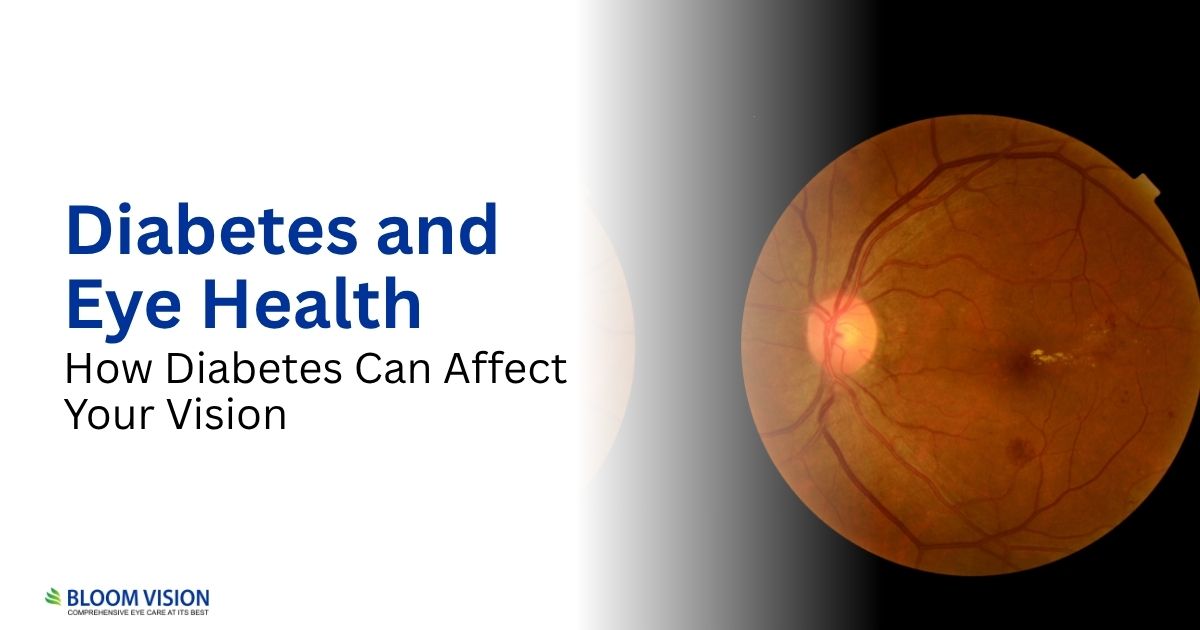
Diabetes affects more than blood sugar levels. Over time, high blood glucose can damage blood vessels throughout the body, including the tiny blood vessels that supply the retina—the light-sensitive tissue at the back of the eye.
This can lead to diabetic eye disease, a group of conditions that may affect vision and, if untreated, can result in permanent vision loss.
One of the most important conditions associated with diabetes is diabetic retinopathy. The challenge is that diabetic retinopathy may have no noticeable symptoms in its early stages. Regular eye examinations can therefore play an important role in protecting vision.
At Bloom Vision Eye Clinic, Dr. Abhishek Sharma, MBBS, MS (Ophthalmology), provides comprehensive eye evaluation and diabetic eye care for patients in Delhi and Gurugram.
How Does Diabetes Affect the Eyes?
When blood glucose remains elevated over time, it can damage the small blood vessels in the retina.
These damaged blood vessels may:
- Become weak
- Leak fluid or blood
- Become blocked
- Reduce the retina’s blood supply
- Trigger the growth of abnormal new blood vessels
These changes can affect the retina and, in advanced cases, lead to significant vision loss.
Diabetes can also increase the risk of other eye conditions, including cataracts and glaucoma.
What Is Diabetic Retinopathy?
Diabetic retinopathy is a diabetes-related eye disease that affects the blood vessels of the retina.
It can develop in people with both type 1 and type 2 diabetes. The longer a person has diabetes, the greater the risk of developing diabetic retinopathy.
Diabetic retinopathy generally progresses through different stages, and not every person with diabetes develops the same severity of disease.
Non-Proliferative Diabetic Retinopathy
In the earlier stage, the small retinal blood vessels can become damaged and may leak fluid or blood.
Small areas of swelling or abnormal blood vessels may develop within the retina.
At this stage, a person may have few or no noticeable vision symptoms.
Proliferative Diabetic Retinopathy
In more advanced disease, the retina may respond to reduced blood supply by developing abnormal new blood vessels.
These vessels are fragile and can bleed into the vitreous, the gel-like substance inside the eye.
Scar tissue can also develop and, in severe cases, contribute to tractional retinal detachment.
What Is Diabetic Macular Edema?
Another important complication of diabetes is diabetic macular edema (DME).
The macula is the central part of the retina responsible for detailed, sharp vision.
When damaged retinal blood vessels leak fluid into the macula, swelling can occur. This can result in blurred or distorted central vision.
DME can occur at different stages of diabetic retinopathy and requires appropriate ophthalmic evaluation.
What Are the Symptoms of Diabetic Retinopathy?
One of the most important things to remember is that early diabetic retinopathy often has no symptoms.
You can have retinal damage even when your vision appears normal.
As diabetic eye disease progresses, possible symptoms include:
- Blurred vision
- Difficulty reading
- Difficulty seeing distant objects
- Distorted vision
- Floaters or dark spots
- Difficulty seeing at night
- Changes in color perception
- Double vision
- Reduced or missing areas of vision
- Sudden changes in vision
If you experience sudden vision changes, flashes, a sudden increase in floaters, dark areas in your vision or significant loss of vision, seek prompt medical attention.
Can You Have Diabetic Retinopathy With Normal Vision?
Yes.
This is one of the reasons diabetic eye examinations are so important.
A person may have good visual acuity and still have early changes in the retina. Symptoms may not appear until the disease becomes more advanced.
Therefore, waiting until your vision becomes blurry is not a good strategy for detecting diabetic eye disease.
Who Is at Risk of Diabetic Retinopathy?
Anyone with diabetes can develop diabetic retinopathy.
Risk generally increases with:
- Longer duration of diabetes
- Poorly controlled blood glucose
- High blood pressure
- High cholesterol
- Pregnancy in people with diabetes
- Existing diabetic retinopathy
- Other diabetes-related health complications
Managing blood glucose, blood pressure and cholesterol can help reduce the risk of diabetes-related vision problems.
How Is Diabetic Eye Disease Diagnosed?
A comprehensive eye examination is essential for detecting diabetic retinal changes.
Your ophthalmologist may perform:
Visual Acuity Test
This checks how clearly you can see at different distances.
Dilated Eye Examination
Eye drops are used to widen the pupils, allowing the ophthalmologist to examine the retina and optic nerve more thoroughly.
This is an important test because diabetic retinal changes may be present before symptoms appear.
Retinal Imaging
Retinal photography and other imaging technologies can help document and monitor changes in the retina.
OCT Scan
Optical Coherence Tomography (OCT) provides detailed cross-sectional images of the retina and can be particularly useful when evaluating retinal swelling or macular changes.
Fluorescein Angiography
In selected patients, fluorescein angiography may be performed to examine retinal blood vessels and identify leakage or abnormal blood vessel growth.
Your ophthalmologist will determine which tests are appropriate based on your symptoms and examination findings.
How Often Should a Person With Diabetes Get an Eye Examination?
People with diabetes generally need regular comprehensive eye examinations, even when they have no vision problems.
The National Eye Institute recommends a comprehensive dilated eye examination at least once a year for people with diabetes, although the appropriate frequency can be different depending on the patient’s condition.
People with established diabetic retinopathy may need examinations more frequently—for example, every few months in some cases.
For people who have recently been diagnosed with diabetes, the timing of the first eye examination can depend on the type of diabetes and individual circumstances. The American Diabetes Association recommends an eye examination soon after diagnosis for people with type 2 diabetes and within five years of diagnosis for people with type 1 diabetes, followed by ongoing examinations.
Your ophthalmologist can recommend the appropriate schedule for you.
How Is Diabetic Retinopathy Treated?
Treatment depends on the type and severity of diabetic eye disease.
1. Monitoring
Early or mild diabetic retinopathy may not require immediate eye treatment.
Instead, your ophthalmologist may recommend regular monitoring while you work with your diabetes-care team to manage blood glucose and other risk factors.
2. Anti-VEGF Injections
Anti-VEGF medications can be injected into the eye to reduce abnormal blood vessel growth and retinal swelling.
They are commonly used for conditions such as diabetic macular edema and certain forms of proliferative diabetic retinopathy.
3. Steroid Treatment
In selected cases, corticosteroid treatment may be considered to help reduce retinal swelling.
4. Laser Treatment
Laser treatment may be recommended for certain forms of advanced diabetic retinopathy.
One type, called panretinal photocoagulation, uses laser treatment to reduce abnormal retinal blood vessel growth and associated complications.
5. Vitrectomy Surgery
If there is significant bleeding into the vitreous or substantial scar tissue, a surgical procedure called vitrectomy may be considered.
The appropriate treatment depends on the severity and specific characteristics of the retinal disease.
Can Diabetic Retinopathy Be Prevented?
Not every case can be completely prevented, but good diabetes management can help reduce the risk of developing or worsening diabetic eye disease.
Important steps include:
Keep Blood Glucose Under Control
Work with your diabetes-care team to establish appropriate blood glucose targets.
Monitor Blood Pressure
High blood pressure can increase the risk of diabetic eye complications.
Manage Cholesterol
High cholesterol can also contribute to vascular complications associated with diabetes.
Take Prescribed Medication
Follow your doctor’s instructions regarding diabetes medications, insulin and other prescribed treatments.
Stay Physically Active
Regular physical activity, when appropriate for your health, can support overall diabetes management.
Do Not Skip Eye Examinations
Even if you can see clearly, regular diabetic eye examinations remain important because early retinal disease may not cause symptoms.
Diabetes Can Also Increase the Risk of Cataracts
Diabetes is associated with an increased risk of cataracts.
A cataract occurs when the natural lens of the eye becomes cloudy, resulting in blurred or hazy vision.
According to the National Eye Institute, people with diabetes are 2 to 5 times more likely to develop cataracts and may develop them at a younger age.
If cataracts and diabetes occur together, an ophthalmologist can evaluate the condition and discuss appropriate treatment.
Diabetes and Glaucoma
Diabetes can also increase the risk of glaucoma.
The National Eye Institute reports that diabetes nearly doubles the risk of developing open-angle glaucoma.
Glaucoma damages the optic nerve and may progress without noticeable symptoms in its early stages.
This is another reason why a comprehensive eye examination is important for people with diabetes.
Is Diabetic Retinopathy Curable?
There is currently no simple treatment that reverses all retinal damage caused by diabetic retinopathy.
However, early detection and appropriate treatment can help prevent or slow further vision loss.
Depending on the condition, treatment may include monitoring, injections, laser treatment or surgery.
The earlier significant retinal changes are detected, the more opportunities there may be to protect vision.
When Should a Person With Diabetes See an Eye Doctor Immediately?
Do not wait for your next routine appointment if you experience:
- Sudden blurred vision
- Sudden loss of vision
- New or sudden increase in floaters
- Flashes of light
- Dark spots or shadows
- Missing areas of vision
- Double vision
- Sudden difficulty focusing
These symptoms can have several causes and require prompt assessment.
Why Choose Bloom Vision Eye Clinic for Diabetic Eye Care?
At Bloom Vision Eye Clinic, diabetic patients can undergo comprehensive eye and retinal evaluation to identify diabetes-related changes at an early stage.
Under the care of Dr. Abhishek Sharma, MBBS, MS (Ophthalmology), patients can receive evaluation for conditions including diabetic retinopathy and other diabetes-associated eye problems.
The clinic’s approach may include:
- Comprehensive eye examination
- Dilated retinal examination
- Retinal evaluation
- Diabetes-related eye disease screening
- OCT and other diagnostic imaging when indicated
- Monitoring of retinal changes
- Appropriate referral or treatment planning when required
The frequency of examinations and treatment is individualized according to the patient’s diabetes history, retinal findings and overall eye health.
Frequently Asked Questions
Can diabetes cause blindness?
Yes. Severe diabetic eye disease can cause permanent vision loss and blindness. However, early detection, appropriate treatment and good diabetes management can significantly reduce the risk of severe vision loss.
Can diabetic retinopathy be present without symptoms?
Yes. Early diabetic retinopathy often causes no noticeable symptoms. This is why regular comprehensive eye examinations are important.
Can diabetic retinopathy be treated?
Yes. Depending on its stage and complications, treatment may include monitoring, anti-VEGF injections, steroids, laser treatment or vitrectomy surgery.
Does controlling blood sugar help protect the eyes?
Yes. Managing blood glucose is an important part of reducing the risk of diabetic eye disease and slowing progression. Blood pressure and cholesterol management are also important.
Should I get an eye examination even if I have no vision problems?
Yes. Diabetic retinopathy can develop before symptoms appear. Regular comprehensive eye examinations can help detect retinal changes earlier.
Final Thoughts
Diabetes and eye health are closely connected. High blood glucose over time can damage the blood vessels of the retina and contribute to diabetic retinopathy, diabetic macular edema and other eye conditions.
The important point is that diabetic eye disease may develop silently.
If you have diabetes, don’t wait for your vision to become blurry before having your eyes examined. Regular comprehensive eye examinations, along with appropriate management of blood glucose, blood pressure and cholesterol, can help protect your vision.
If you have diabetes or have noticed changes in your vision, schedule a comprehensive eye examination with an ophthalmologist.
Book a Diabetic Eye Examination at Bloom Vision Eye Clinic
Bloom Vision Eye Clinic – Dwarka
Plot No. 65, Sector-12A Road, Block A, Sector 12, Dwarka, Delhi – 110078
Phone: +91 76785 31120
Bloom Vision Eye Clinic – Gurugram
2609-A, Opposite DSOI, Block F, Sector 2, Palam Vihar, Gurugram, Haryana – 122017
Phone: +91 99717 16288
Consult Dr. Abhishek Sharma for comprehensive diabetic eye and retinal evaluation.